Plasterboard Application Areas
1. Walls
- Interior Walls: Plasterboard is widely used to build interior partition walls in homes, offices, and commercial buildings. It’s ideal for creating smooth surfaces for painting, wallpapering, or tiling.
- Fire-Resistant Walls: Specialized fire-resistant plasterboard (often with added minerals or fibers) is used to create fire-rated walls, providing additional protection in buildings, particularly in areas like kitchens, utility rooms, and industrial spaces.
2. Ceilings
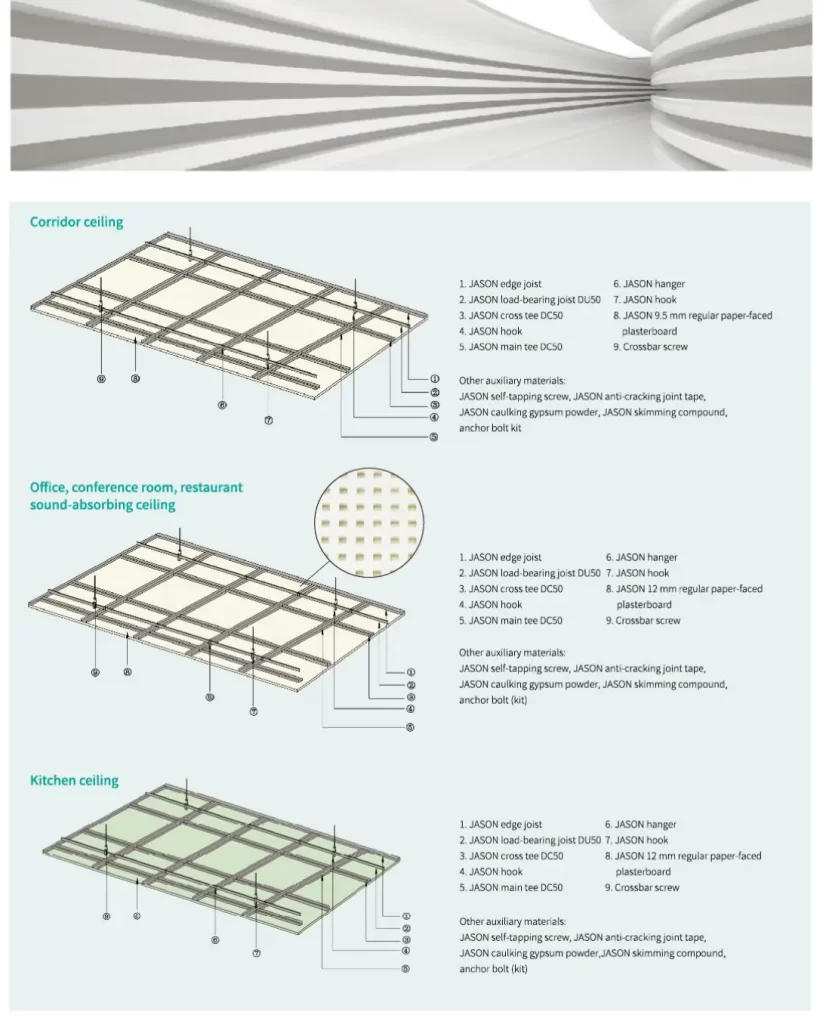
- Suspended Ceilings: Plasterboard is used in suspended ceiling systems, which are common in offices, hospitals, schools, and other commercial buildings. These ceilings allow easy access to electrical wiring, air conditioning ducts, and pipes.
- Smooth Finish Ceilings: In residential settings, plasterboard is used for smooth, flat ceilings, creating an aesthetically pleasing finish that can be painted or finished in various ways.
3. Dry Lining / Partitioning
- Temporary or Permanent Partitions: Plasterboard is often used to create lightweight, quick-to-construct partitions, whether for dividing rooms in homes or creating office cubicles.
- Acoustic Partitions: In areas where soundproofing is essential (e.g., music studios, conference rooms, or bedrooms), acoustic plasterboard with sound-dampening properties can be used.
4. Fire Protection
- Fire-Resistant Boards: As mentioned, fire-resistant plasterboard is used to protect areas that need to meet fire safety codes, such as around boilers, chimneys, or electrical equipment.
- Fireproof Ceilings and Walls: In commercial buildings or homes where fire safety is a priority, plasterboard systems are often used to create fire-resistant walls and ceilings, especially in areas that require extended fire resistance ratings.
5. Moisture-Resistant Applications
- Bathrooms and Kitchens: Moisture-resistant plasterboard (often called “green board” or “purple board”) is designed for areas with high humidity or occasional water exposure. It’s commonly used in bathrooms, kitchens, laundry rooms, and basements.
- Swimming Pools or Saunas: In areas with high moisture levels, specialized plasterboard like cement-based board is used to resist damage from constant moisture.
6. Soundproofing
- Soundproof Rooms or Studios: Plasterboard is often used in soundproofing applications. Acoustic plasterboard, designed with noise-reducing materials, is frequently used in recording studios, theaters, or apartment buildings where sound transmission between rooms needs to be minimized.
7. Decorative Finishes
- Cove and Cornice Designs: Plasterboard is used to create decorative ceiling and wall features, such as coving, cornices, and arches, which are popular in both modern and traditional interior designs.
- Textured Finishes: Plasterboard can also be used as a base for textured wall finishes or decorative plasterwork.
8. External Applications (with Special Coatings)
- Exterior Cladding: In some cases, plasterboard with special moisture- and weather-resistant coatings can be used as an exterior cladding material, though this is less common than its use in interior applications.
9. Green Building and Sustainability
- Eco-Friendly Projects: Plasterboard is increasingly used in green building projects. Some types of plasterboard are made with recycled materials or natural gypsum and can be part of energy-efficient, sustainable construction designs.
- Energy Efficiency: Plasterboard can contribute to insulation and energy efficiency in buildings when used in conjunction with thermal or acoustic insulation materials.
10. Insulation (Thermal and Acoustic)
- Thermal Insulation: Some types of plasterboard come with integrated thermal insulation properties or can be combined with insulation materials to improve energy efficiency in homes and buildings.
- Acoustic Insulation: Acoustic plasterboard helps reduce noise transmission between rooms or from the outside environment, improving comfort and privacy.
11. Industrial and Commercial Use
- Warehouses and Factories: Plasterboard is often used in the construction of walls and ceilings in industrial environments, where it can provide both structural integrity and aesthetic appeal. Some industrial-grade plasterboard also offers enhanced fire resistance.